ACEMAGIC Starship M2A: i9-12900H + RTX 3070 16GB Mini PC at ~1.04M KRW (2026)
ACEMAGIC's Starship M2A mini PC packs a 14-core i9-12900H, RTX 3070 Laptop GPU with 16GB VRAM, and 1TB SSD for 5,199 yuan (~1.04M KRW).
ACEMAGIC's latest mini PC launch, the Starship M2A, is turning heads for one unusual disconnect: it looks like a spaceship toy, but the spec sheet underneath reads like a 2022 flagship workstation. The announcement comes via Chinese tech outlet IT Home — covered on QuasarZone on Nov 4 — and lists JD.com pricing of 5,199 yuan, roughly 1.04 million KRW at the exchange rates cited in the original article.
If you are in the market right now for a secondary machine for local AI inference or small-team GPU workloads, that price and that VRAM number deserve a longer look.
TL;DR
- A mini PC with a 14-core i9-12900H and RTX 3070 Laptop GPU with 16GB GDDR6 is on sale for 5,199 yuan (~1.04M KRW / JD.com).
- The 16GB VRAM is the hidden commodity here: it is enough memory to run quantized local LLMs and diffusion models that a standard 8GB laptop GPU cannot hold.
- The trade-offs are real: DDR4 (not DDR5) system memory, PCIe 3.0 storage, a laptop GPU capped at 115W, and an import-heavy purchase path for most readers.
The situation
Mini PCs have been quietly solving a problem that neither desktops nor laptops address well: a GPU-heavy machine that fits on a desk shelf, draws modest power, and does not require a case-building session. The Starship M2A pushes that line further by targeting the GPU itself.
Per the IT Home coverage relayed on QuasarZone, the headline figures are:
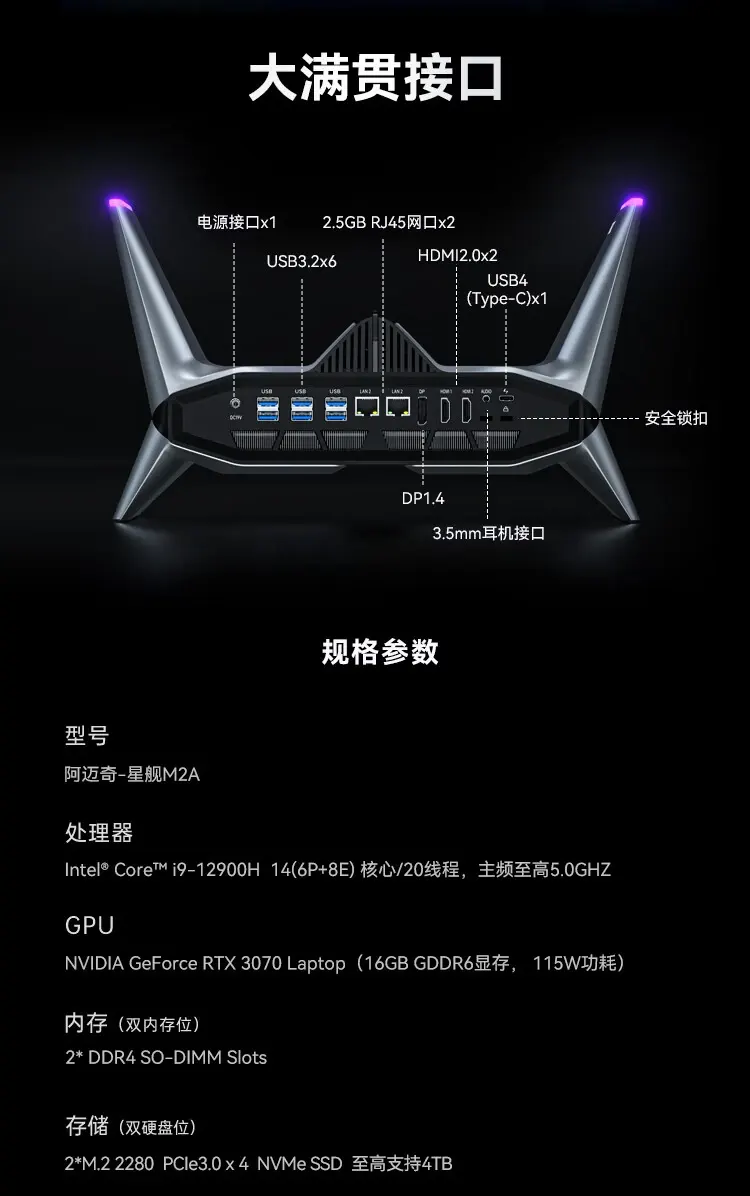
| Component | Starship M2A | Notes |
|---|---|---|
| CPU | Intel Core i9-12900H | 14 cores / 20 threads, up to 5.0GHz, 24MB L3 |
| GPU | GeForce RTX 3070 Laptop GPU, 16GB GDDR6 | 5,120 CUDA cores, up to 115W |
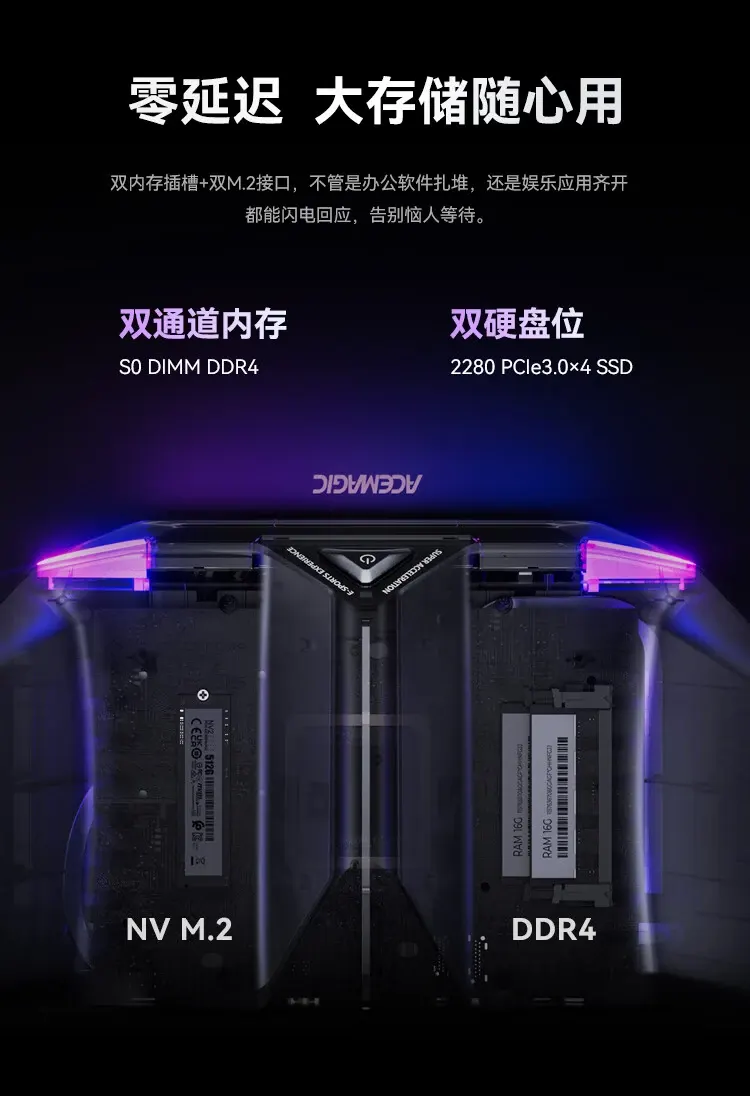
| Memory | 16GB DDR4 SO-DIMM | 2 slots, user-expandable 1 |
| Storage | 1TB SSD | 2× M.2 2280 PCIe 3.0×4 NVMe slots |
| Cooling | 4 large low-noise fans, 7 heat pipes | Claimed 45% better than "typical" solutions |
| Dimensions | 315 × 255 × 198mm | With a 1.9" bar-type DIY display on the front |
| Ports | USB4 ×1 (8K@60), HDMI 2.0 ×2 (4K@60), DP 1.4 ×1 (8K@60) | Up to 4 monitors, 2× 2.5GbE |
| Warranty | 1 year full, 3 years on major hardware | Per the announcement |
| Price | 5,199 yuan (~1.04M KRW) | JD.com listing, Nov 4 2026 |
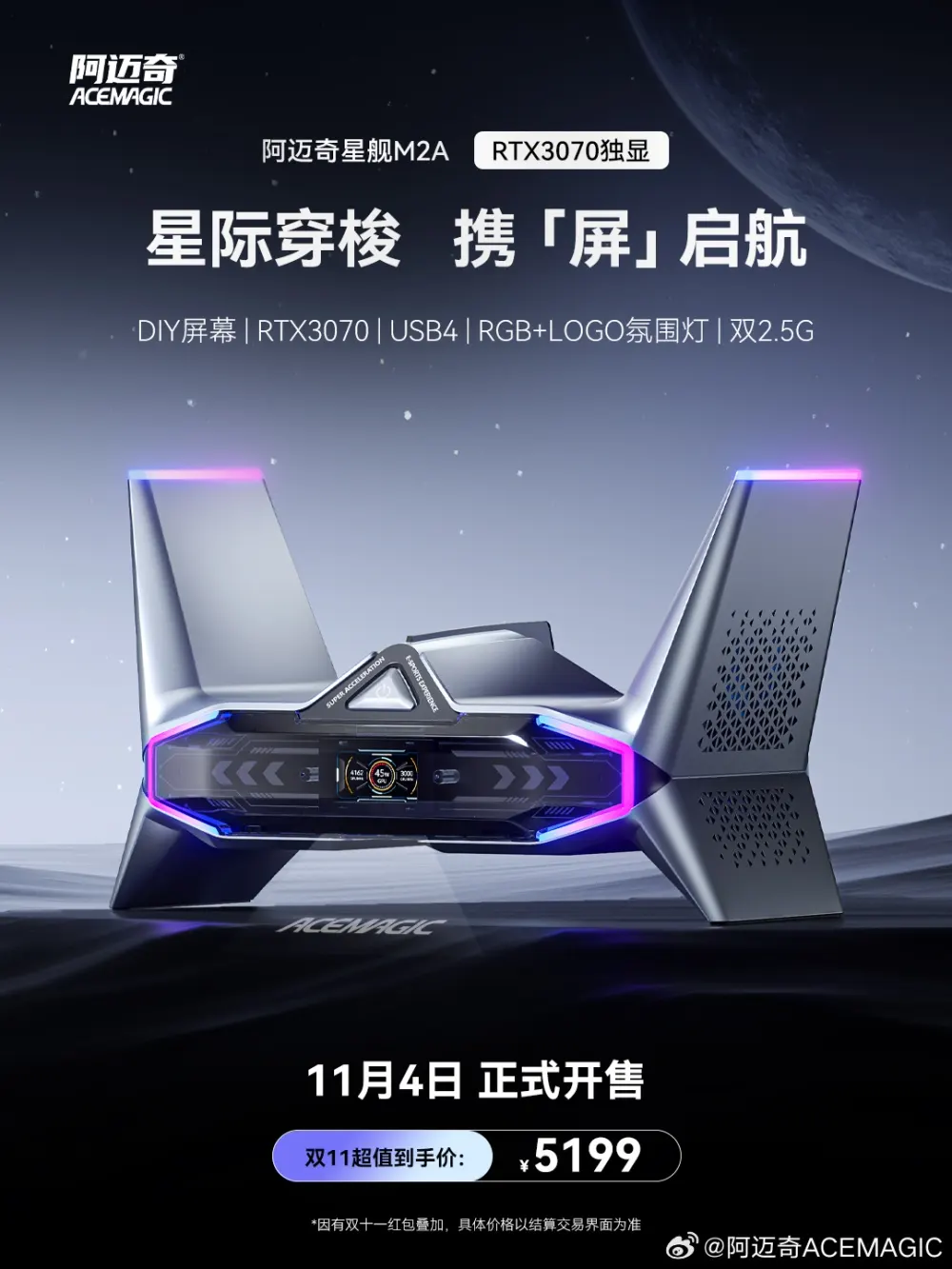
Why a laptop GPU inside a mini PC is not a compromise you'd expect
Custom mini enclosures have historically made an ugly trade: either they accept retro-grade desktop GPUs (power-hungry, needs a brick), or they use thin laptop GPUs capped at 50–70W. The Starship M2A splits the difference with a 115W RTX 3070 Laptop GPU, which keeps far more of the desktop card's performance envelope than the 50W variants most mini-boxes use.
The supporters of 115W-class laptop GPUs already know the pattern: your real frames-per-second number converges on the desktop card as long as the VRAM holds, because most games are bandwidth-bound rather than clock-bound in 1080p/1440p ranges. What this enclosure gains in acoustic engineering it spends on the CPU's 45W + GPU's 115W combined load — the four-fan, seven-heat-pipe stack exists for the dual reason of moving that heat out and moving the display content in.
The 16GB VRAM is the real product here
For a desktop replacement, 16GB of VRAM on a 3070-class card is the anomaly — the eighth-generation laptop cards maxed at 8GB, and the card Dell/Alienware-grade flagships shipped with in 2022 rarely went to 16GB on this tier. For gaming, 16GB is comfort. For local inference work, it is the difference between running and not running:
- A 7B-class open LLM at 8-bit quantization fits in roughly 7–10GB of VRAM [unverified — depends on the exact quantization and context length; verify with the toolchain you plan to use].
- Image-generation pipelines (SDXL-family) usually need 12–24GB [unverified — model and resolution dependent].
- 16GB on this box means quantized 13B-class LLM workloads become practical, which is exactly the workload a solo developer or a two-person team cannot put in the cloud without ongoing API bill risk.
If your actual computing bill today reads like a monthly inference API subscription, a 1.04M KRW one-time purchase against that recurring line is the Tech × Money math this blog exists for: it converts a subscription line into a capital purchase with a clear floor (0 cents/req at self-inference time) and a ceiling (CPU/GPU mechanics, 3-year major-hardware warranty claimed by the manufacturer, delivery and import risk).
The caveat list is equally concrete:
- DDR4, not DDR5 — the memory bandwidth ceiling for CPU-side workloads will be lower than a 13th-gen laptop with DDR5. For GPU-bound execution the penalty is mostly irrelevant; for CPU-bound batch jobs it is not.
- PCIe 3.0 NVMe storage — sequential reads sit near 3.5GB/s class rather than the 12GB/s-class DDR5/M.2 era. Model loading times will reflect that.
- 115W GPU — Starsand-complex marketplaces in December 2026 — verify the power draw in the exact listing, since Chinese marketplaces occasionally list "115W" as a TGP ceiling while the shipped mode-set runs lower [unverified until bench data lands].
- Import logistics — JD.com plus cross-border warranty service is not the same as walking into a Korean retail A/S counter. The announced 3-year "major hardware" tier helps, but check what JD's own return policy costs you before committing a nine-figure-won payment to it.
Price context: is 1.04M KRW actually a deal?
Let's be careful with numbers here. What the announcement actually prices is the Chinese-market launch configuration. What that translates to at your checkout depends on the exchange rate on your purchase day, import brokerage, and shipping.
What the price is anchored against, though, is an internal supplier debate: a 2022-generation laptop with i9-12900H + RTX 3070-class GPU still sits above the 1M KRW line in the Korean refurb market — different packaging, but an identical CPU/GPU pairing [unverified — the refurb market fluctuates weekly]. The Starship M2A's pitch is a similar compute envelope in a box with monitor ports on the back instead of in a lid, and display-expansion appetite instead of keyboard appetite.
The one figure that would make this a clear verdict is a model frame-rate bench — the manufacturer's 45% cooling claim is marketing language, and neither IT Home nor the QuasarZone relay includes benchmark data. Until an independent 3D bench lands, treat the spec sheet as "plausible on paper" rather than "proven at load."
What the QuasarZone community said
The comment section (22 comments at the time of writing) is almost uniformly a reaction to the design, with price-value opinion as the second theme. Paraphrasing the sentiment rather than quoting individuals:
- Design-first reactions dominate. The spaceship/metroid styling draws in "clever / desk-above-lavish / unusual" reactions; a minority compares it to a router or a Star Wars vessel and says it is not their taste. Nobody calls the design low-effort.
- Value verdict skews positive with a structure caveat. Several commenters call the price reasonable or good-to-consider given current component pricing; one reads the VRAM size as the generous part. Two commenters, though, raise the question that the blog's readers should also ask: whether the listed memory is included in the JD.com figure, and whether RAM/slots can be upgraded later — both marked as unconfirmed in the announcement itself.
- DDR4 gets spotted. At least two commenters call out the DDR4 choice as a conscious trade — the same trade-off vector this article flags above.
- A market-structure note. One commenter tracks the trend line rather than the product: as semiconductor normalization stays hard, the drift toward mini PCs and away from full desktops intensifies. That observation is the stronger reason this product class is worth the blog's price lens, beyond the single posting.
Verdict
The Starship M2A is a classic "choose-modern-compromise" product: it trades DDR5 and PCIe 4.0 on the CPU side for a 16GB VRAM GPU inside a desk-sized shell, and it asks you to treat import logistics as part of the price. If that argument lands in your favor, the 5,199-yuan list price is the compelling part — not the spaceship fins.
For most readers of this blog the purchase decision order will be:
- Decide whether your workload is GPU-bound (inference/render) or CPU-bound (media batch, builds). The 12900H is a strong hybrid but the mobile platform's cache/IO is the weakest link in the chain here.
- Confirm the listing actually includes the memory and verify the JD.com seller is the official store, not a marketplace reseller.
- Check your local import headroom: a 9-figure-won box that arrives via cross-border courier may add brokerage and warranty friction worth more than the 30,000 KRW difference it could save against alternatives.
An "in-box" CJK coefficient at 1.04M KRW is aggressive for 2026 primary-market pricing. The product will get a real verdict once a benchmark article lands at QuasarZone's bench section — which is where we'll check back first.
Wrap-up
- The unusual part of this launch is not the spaceship silhouette — it is a 16GB VRAM RTX 3070 in a mini enclosure at a mobile-GPU-to-mini-desktop price that reads like a mid-2022 flagship laptop with the keyboard deleted.
- Design reaction online is near-unanimously positive, and the value reply is positive-with-questions — the honest comment section verdict includes both the VRAM "generosity" and the DDR4/PCIe-generation trade.
- If you are buying this to slash a recurring inference API bill, do the one-time capital purchase math with your own actual usage; that's where this product becomes an argument instead of a curiosity.
Sources: announcement details come from an IT Home article as translated on QuasarZone (Nov 4, 2026) — QuasarZone: 아마치 Starship M2A 출시 기사. Product photos are the marketing/editorial images accompanying that article. All prices are as listed on JD.com at announcement time and will vary with exchange rates and availability.
Footnotes
-
The announcement lists SO-DIMM slots and claims expandability to 4TB of storage; whether the 16GB base memory is included in the JD.com price was flagged as uncertain in user discussion. Verify with the seller before purchase. ↩