The 2026 RAM Price Crisis: Why a $110 'Discount' Still Means $539 for 32GB DDR5
32GB DDR5 kits cost 4–5x their 2025 price. Inside the numbers, the suppliers' warnings for 2027, and the only buying strategies that still math out.
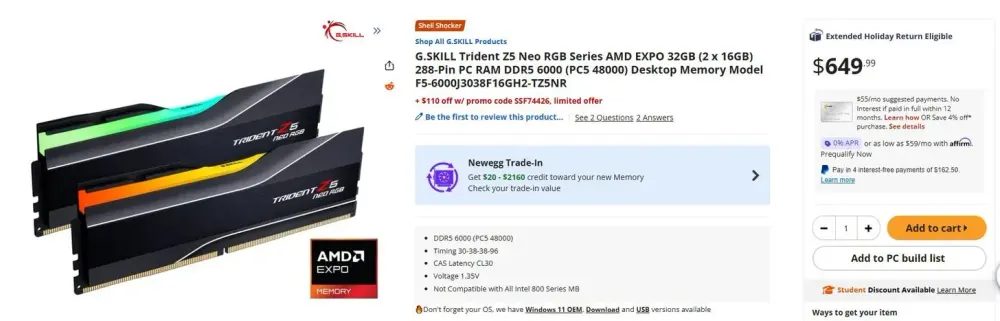
A memory vendor discounted its most popular 32GB DDR5 kit by $110 this week. The new price: $539 — for a kit that sold in some configurations for one-fifth of that about a year ago. The reactions on the Korean hardware forum where the news landed were four short variations of the same sentence: "still expensive."
This is the RAM price crisis, quantified: what actually happened to the numbers, what the suppliers are warning about for 2027, where the first cracks are showing, and the buying strategies that still make sense when the baseline itself has moved 5×.
TL;DR
- The US cheapest-price index for 32GB DDR5-6000 went ~$100–$200 (Oct 2025) → $454 (Jan 2026) → $400 (Aug) → $449.97 (Oct 14). In Europe, a 4-kit average went from ~€113 to ~€544 — about 4.9× in 13 months.
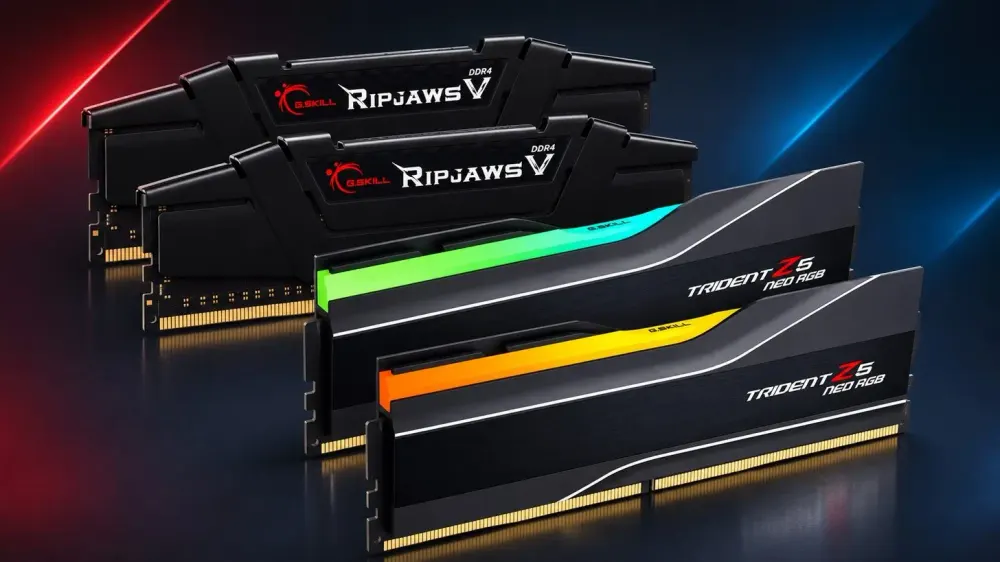
- G.Skill's "Black Friday preview" discounts delivered cuts of 2–17% on kits whose reference prices already sit at 4–5× the 2025 baseline: $649 → $539 (32GB) and $699 → $679. Its DDR4 kits landed at $209–$224.
- TeamGroup's CEO warns the worst shortage runs Q4 2026 into mid-2027 [unverified — vendor projection, not an observed event] and that soon customers "will pay more and get nothing."
- First cracks are real, though tiny: Corsair 32GB Vengeance fell to $369.99–$379.99 from ~$490; a G.Skill 32GB kit sold for $156 inside a CPU+motherboard bundle.
- No upgrade stops working. The buyer's job in a 5× market is different: don't buy, size honestly, and treat bundles as the real discount channel.
The numbers, in one table
| When | What | Price (US, cheapest verified) |
|---|---|---|
| Oct 2025 | 32GB DDR5-6000 | ~$100–$200 |
| Jan 27, 2026 | 32GB DDR5-6000 | $454 (DDR5-5600: $409, DDR5-6600: $655); DDR5 price index |
| Aug 2026 | 32GB DDR5-6000 | ~$400 |
| Oct 14, 2026 | 32GB DDR5-6000 | $449.97 (cheapest advertised) |
| Nov 5, 2026 | G.Skill Trident Z5 Neo RGB 32GB, w/ $110 off | $539 (list $649) |
| Nov 5, 2026 | G.Skill Trident Z5 Neo RGB 32GB, "bigger" kit | $679 (list $699) |
| Nov 5, 2026 | DDR4 32GB kits (G.Skill) | $209 (Ripjaws V), $219, $224 |
translate that through any shopping region and the story is identical, with local accents: the European 4-kit sample (Corsair, G.Skill, Kingston, Patriot) averaged ~€113 in September 2025 and ~€544 by late September 2026, with G.Skill's prices up +138% in the first two months of the crisis alone — the steepest of the four brands, because its CL30-class kits are the enthusiasts' default. The boring upgrade line item became a negotiation budget.
Why the climb? The cause chain is public and boring in the way that real costs are: AI accelerator demand pulled the big three's (Samsung, SK Hynix, Micron) wafer allocation toward HBM and enterprise DRAM, and consumer DIMM supply became the residual — Samsung's quarterly DRAM revenue share reached 38% on that same demand wave, per the Nov 5 regional relay. Suppliers' pricing reflects their procurement cost, not your upgrade budget, as G.Skill's own explanation puts it: procurement and sourcing costs "have substantially increased," subject to change without notice.
What the suppliers are saying now
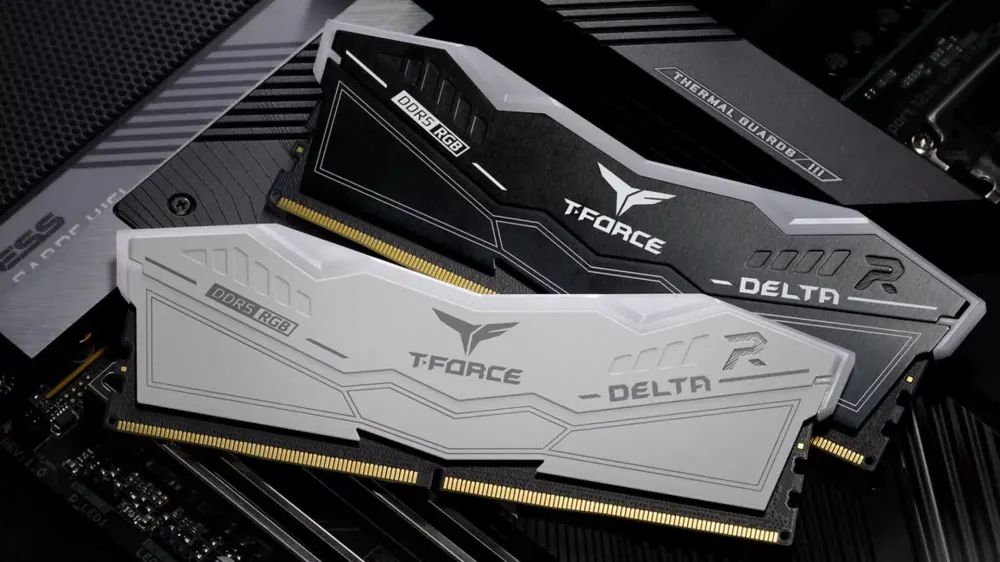
TeamGroup — a Taiwan-based maker of consumer and industrial memory — put quarterly numbers next to a warning worth your attention. Its CEO (Cheon Ching-yuan, per the coverage) expects prices to keep rising "for several months," and frames the peak as the worst semiconductor shortage, running from Q4 2026 into the middle of the following year — with his bluntest warning being that soon customers will pay the premium and still find nothing to buy. Two more lines from that statement travel well beyond the forum:
- Supply is being negotiated at spot premiums. Even with contracts signed, allocation came up short: the company said it's buying part of its own supply back at spot-market prices.
- The customer mix has flipped. TeamGroup's B2B revenue share jumped from ~24% (first three quarters of 2025) to 64% in the same window of 2026, while B2C share collapsed from 75% to 35%. Why would a memory vendor pass on consumers? Because lots of AI-adjacent business want every module it can source, at retail-plus pricing, in volume.
And the financials confirm the incentive: Q3 revenue of NT$10.139B (about US $311.5M), +33% quarter over quarter, with operating profit up 46.8% and net profit around +50% — reported at exactly the moment its consumer business can't get stock. The price curve isn't malice; it's margin.
Where the cracks are showing
Three signals that the plateau has edges, all from the last weeks:
- Corsair's standalone prices slipped before the official discount season: 32GB Vengeance DDR5-6000/6400 fell to $369.99–$379.99, down from ~$490 recent highs — reportedly the first meaningful step-down in months.
- Bundles are the deep discount channel: a G.Skill 32GB DDR5 kit landed at $156 when purchased with a Ryzen chip and motherboard. The standalone price did not drop $293; the allocation logic of a bundle lets the platform vendor get paid once for the whole ticket.
- DDR4 isn't the escape hatch. With DDR4 module production winding down over 2026, its prices are up 86%+ vs 2024 — G.Skill's own DDR4 kit discounts land at $209–$224 for 32GB, versus roughly a quarter of that in 2024 [unverified as a UK/global retail average — varies by market].
None of that promises the crisis is ending. Suppliers — including the big three and the Taiwanese ecosystem companies — have collectively said 2027 as the earliest stabilization. Tom's Hardware's European price tracking is already reporting month-over-month stabilization, roughly ±0.1% in a recent month [at publication — paragraph from the site's tracker; check its current month before treating it as a trend statement].
The buying math that survives a 5× market
Everything below assumes you are a builder in a market where the "usual" price of 32GB has moved from ~$100 to ~$400+. The correct decisions change:
- Size honestly, not aspirationally. 16GB is functionally minimum; 32GB is the sweet spot. Over-provisioning at 64GB/96GB means paying the same scarcity multiplier on a much bigger ticket — and forum-level trackers put 64GB kits in the €2,500 range in late 2026 [unverified — a single comment-section figure, check local listings]. A decade of "just buy the bigger kit" advice does not survive a 5×-priced baseline.
- Top-bin speed grades are the wrong luxury. DDR5-6600-class kits tracked at $655+ in the January index — a premium above the 6000's ~$454 at the time for single-digit real-world gains in games. In a scarcity market, latency-tiered pricing expands to capture the budget you'd otherwise spend on capacity.
- If you need CPU + motherboard anyway, bundles are the arithmetic choice. The $156 G.Skill kit inside a chip/board bundle isn't a memory deal — it's a platform deal with memory attached. The alternative — waiting for standalone "$400" kits to drift back — requires assuming the peak was passed; suppliers aren't promising that.
- Don't buy inventory "in case." When suppliers tell you the supply squeeze peaks ahead of you, a third kit you only sort-of need is a leveraged position against your own usage forecast. The first Corsair slip is not (yet) a landslide — and AI demand, the cause of this all, is not forecast to decline. If anything, the floor under RAM prices for the next several quarters is the suppliers' word, which they also profit from telling you.
- Check the used market before overpaying for new. In a 5× market, second-hand listings reprice the fastest — and a matched 32GB kit from a reliable seller routinely undercuts new retail by a wide margin. The risk profile changes too: used DIMMs with zero warranty count against a purchase that already carries import and return friction.
What the community said
Two forum threads ran the same day (November 5). On the G.Skill discount post, four comments in the visible review window were all the same sentiment shape: "still expensive even with the discount." No one debated whether the kits were worth it — the principle of the discount was evaluated against a remembered baseline, not the listing.
The TeamGroup warning article drew 13 reactions within hours, and the distribution was different — analysis instead of annoyance:
- The dominant thread: capacity is the resolution, not discounts ("prices will stabilize only when expanded fabs output consumer allocations"), paired with skepticism that the capacity growth will reach consumers while AI absorbs it ("even if fabs expand, consumer availability is a separate question").
- A resignation pattern: "prices will stabilize, but never return to their old levels" — the same acceptance you'd expect in any market, and notably the same conclusion of the vendor's own quarterly framing.
- One commenter jokingly translated the CEO's tone rather than the words: it was not a reassurance about stabilization, it was a "premium ahead" notice — and the safest reading is to take it exactly that way.
As paraphrased stats, neither thread activity indicates doom or optimism — they indicate that readers track the baseline question, not the discount. That's a sensible evolution: discounts in a 5× market are relative events.
Wrap-up
- Numbers: ~$100–$200 → ~$450–$539 for the standard 32GB DDR5 kit in one year, with a 4.9× European average as the international cross-check.
- Suppliers' own timelines put the worst stretch ending around mid-2027 [unverified — vendor and index-of-truth projections], with AI demand continuing to hoover up capacity cuts to consumer supply.
- Your job if you're buying: 32GB (honestly sized), mid-tier speeds, bundles over standalone, and strict refusal to buy speculative inventory. If your machine already has 32GB — congratulations, your upgrade budget belongs to literally anything else this quarter.
Sources: pricing index via Tom's Hardware tracking as relayed by Tech Insider (Oct 2026); discount specifics from QuasarZone's Nov 5 news relay (translation of wccftech's report); TeamGroup quarterly results and CEO comments via QuasarZone's Nov 5 translation of TechSpot's report; Corsair retail price movement by wccftech's roundup. G.SKILL pricing explanation direct from the company's own posting. Prices shift constantly through 2026 — treat every figure here as a dated snapshot, not a quote.